
AMUN 2026 Welcomes 200 Delegates, Al Azhar Bekasi Students Win Multiple Awards
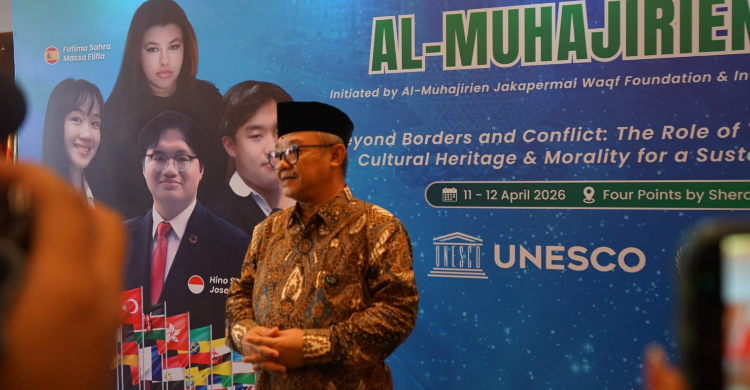
Bekasi — Al-Muhajirien Model United Nations 2026 (AMUN) 2026 was successfully held on April 11–12, 2026, at Four Points by Sheraton Bekasi, bringing together approximately 200 delegates from 61 schools across Greater Jakarta and other regions. The event served as a Model United Nations forum, providing students with a platform to experience international diplomacy in a globally standardized setting.
Over the course of two days, participants engaged in a comprehensive diplomatic process, including drafting country positions, presenting arguments, negotiating with fellow delegates, and formulating resolutions on various global issues.
This year’s conference featured two main councils: UNESCO and World Health Organization. In the UNESCO council, delegates discussed the topic “Tackling Cyberbullying: Ensuring Safe and Friendly Online Spaces for Students,”highlighting the importance of protecting digital environments for young learners.
Meanwhile, the WHO council addressed the theme “Safeguarding Indigenous Knowledge of Traditional Medicine While Ensuring Scientific Validation,” focusing on balancing the preservation of traditional knowledge with scientific validation in global healthcare systems.
All sessions were chaired by international figures, including Fatima Massa from Spain, Zara Pang from Malaysia, as well as Paris Crishen Liu and Hino Samuel Jose from Indonesia. Their presence ensured that the sessions followed international diplomatic procedures while fostering active, critical, and constructive discussions among participants.
AMUN 2026 was organized by International Global Network in collaboration with Yayasan Waqaf Al-Muhajirien Jakapermai. The conference is part of the AYIMUN program, which connects to global networks such as Asia World Model United Nations.
The event was also attended by Indonesia’s Minister of Primary and Secondary Education, Abdul Mu'ti, and the Mayor of Bekasi, Tri Adhianto Tjahyono. In his remarks, Abdul Mu’ti emphasized the importance of experiential learning in shaping the character and capabilities of young people.
“Programs like this align with our efforts to build a resilient generation—one that excels academically while also possessing critical thinking skills, strong communication abilities, and readiness to compete on a global stage. This is part of our journey toward Indonesia’s Golden Generation 2045,” he stated.
Similarly, Tri Adhianto highlighted the real-world value of such forums for students.
“This is not just an event, but a simulation of the real world. Here, participants learn how to express ideas, negotiate, and understand how global systems operate,” he said.
During the conference, students from Al Azhar schools under Yayasan Waqaf Al-Muhajirien Jakapermai achieved a total of nine awards across various categories. At the junior high school level in the UNESCO council, Abiyyu Javier Rizqy from SMPIA 6 Jaka Permai received the Best Delegate award. Meanwhile, Rekyan Syahla Calesta Maheswari and Begawan Billy Kurniawan from SMPIA 8 Kemang Pratama earned Honorable Mention and Verbal Commendation, respectively.
At the senior high school level in the WHO council, students from SMA Islam Al-Azhar 4 also excelled, with Ashilla Jasmin Sani receiving the Most Outstanding Delegate award. Honorable Mentions were awarded to Aleshia Raihana Zahira and Raihan Maulana Syachputra, while Kenzie Athaya Refano, Almaira Balques Kemalputri, and Rayhan Putra Nurdafa received Verbal Commendations.
Chairman of the foundation, Mohammad Syafiudin, stated that these achievements are the result of a structured student development system implemented through the AGILE program (Al-Muhajirien Global Initiative for Leadership Excellence).
“This is not merely a ceremonial activity or a one-time competition, but part of a structured development system we have built. Through AGILE, students are trained to develop strong foundational skills, including communication, critical thinking, and the confidence to express and defend their ideas,” he explained.
Meanwhile, President of International Global Network, Muhammad Fahrizal, emphasized that Model United Nations serves as an effective learning method that exposes students to global realities.
“Through MUN, students do not just learn theory. They are exposed to real-world issues, international perspectives, and complex diplomatic processes. This helps them build arguments, understand differences, and work toward collaborative solutions,” he said.
As part of the opening ceremony, Alnine Choir from SD Islam Al Azhar 9 performed, presenting Indonesia’s national anthem, the foundation’s march, and the song “Hari Baru,” composed by Abdul Mu’ti and arranged and conducted by Dwiki Dharmawan.
The successful implementation of AMUN 2026 reinforces the role of Model United Nations as a contextual learning platform that not only broadens students’ global perspectives but also strengthens their communication, diplomacy, and leadership skills essential competencies for facing future challenges.
Share this
Article